
World Championship 2027 Gold Is the Next Target for Malaysia’s Muhammad Rayyan Darwisy Suhaimi After Zhanjiang Relay Medals

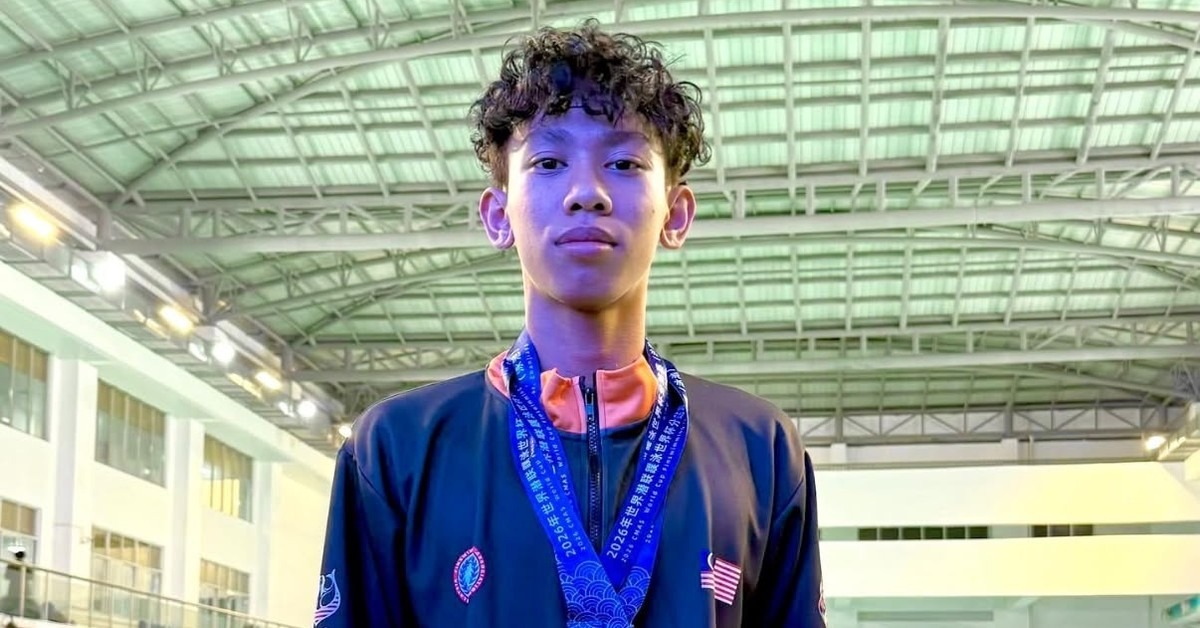
Malaysian finswimmer Muhammad Rayyan Darwisy Suhaimi, 15, has set his sights on the World Championship 2027 after swimming the third leg of two medal-winning relays at the 2026 CMAS World Cup Finswimming Indoor in Zhanjiang, China.
On 11 November, he clocked 54.77 on the third leg as Malaysia won the Men’s Junior 2 4x100m surface relay in 3:45.68, with Marcus Kooi Yin Yong, Amal Ahmad Azizul and Muhammad Aish Hariz Mohd Hairi.
On 13 November, he swam 54.54 on the third leg of the Mixed Junior 2 4x100m SB relay, which Malaysia finished third in 3:40.50 with Leong Chee Hin, Sofea Humairah Shamsornahar and Nur Darwisyah Firzana Rosnan.
“I feel very honoured and proud to be able to contribute gold and bronze to the Malaysia Finswimming Team,” Rayyan told ToughASIA.
Taking over in the middle of a relay, he aims to hold his best average over the first 50m using 70 to 80 per cent of his energy, stretching his distance per stroke as far as he can, before going flat out on the last lap.
He also raced the 50m, 100m and 200m bi-fins and the 50m apnoea over the three days. Switching between bi-fins and monofin is “totally different”, he said.
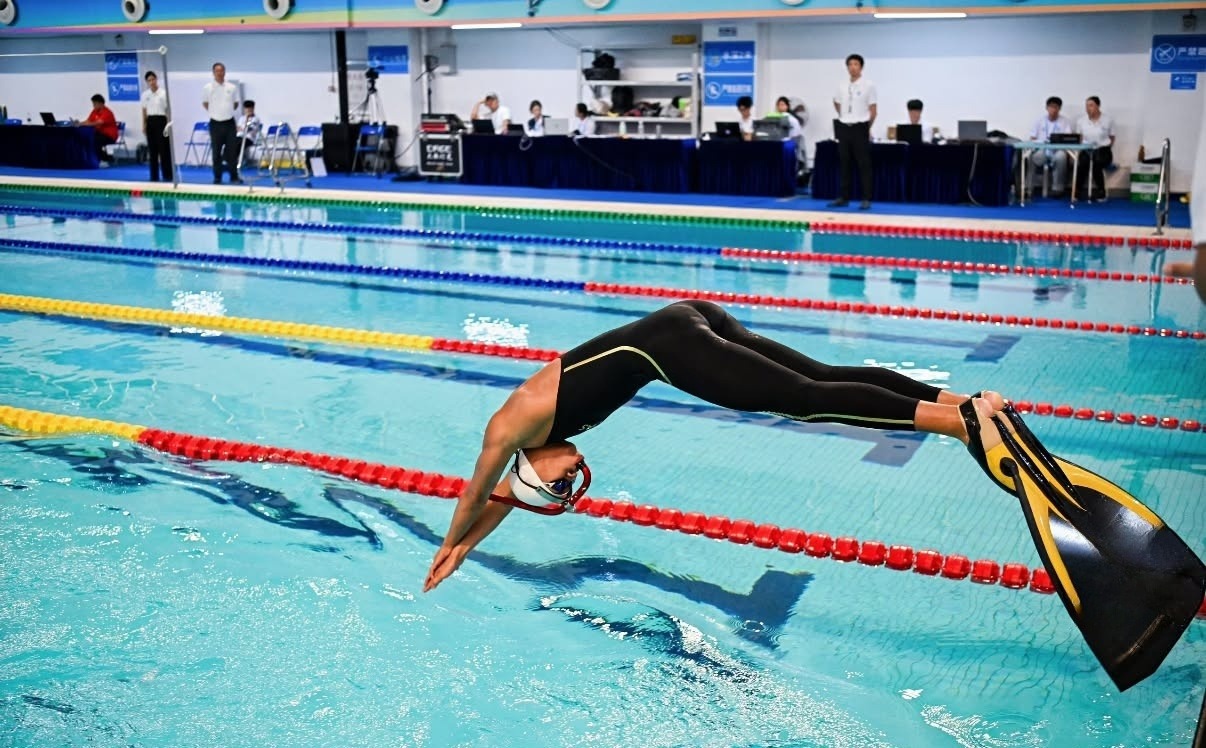
“For bifin, I need to balance my hips, right and left kick to make my movement in the water as streamlined as possible. While for monofin, I need to use more power on my chest, hips and ankles to create more propulsion forward,” he said.
With the monofin, he said, the movement starts in the chest and travels through the hips to the ankles, which must be strong enough to take all the upward and downward power.
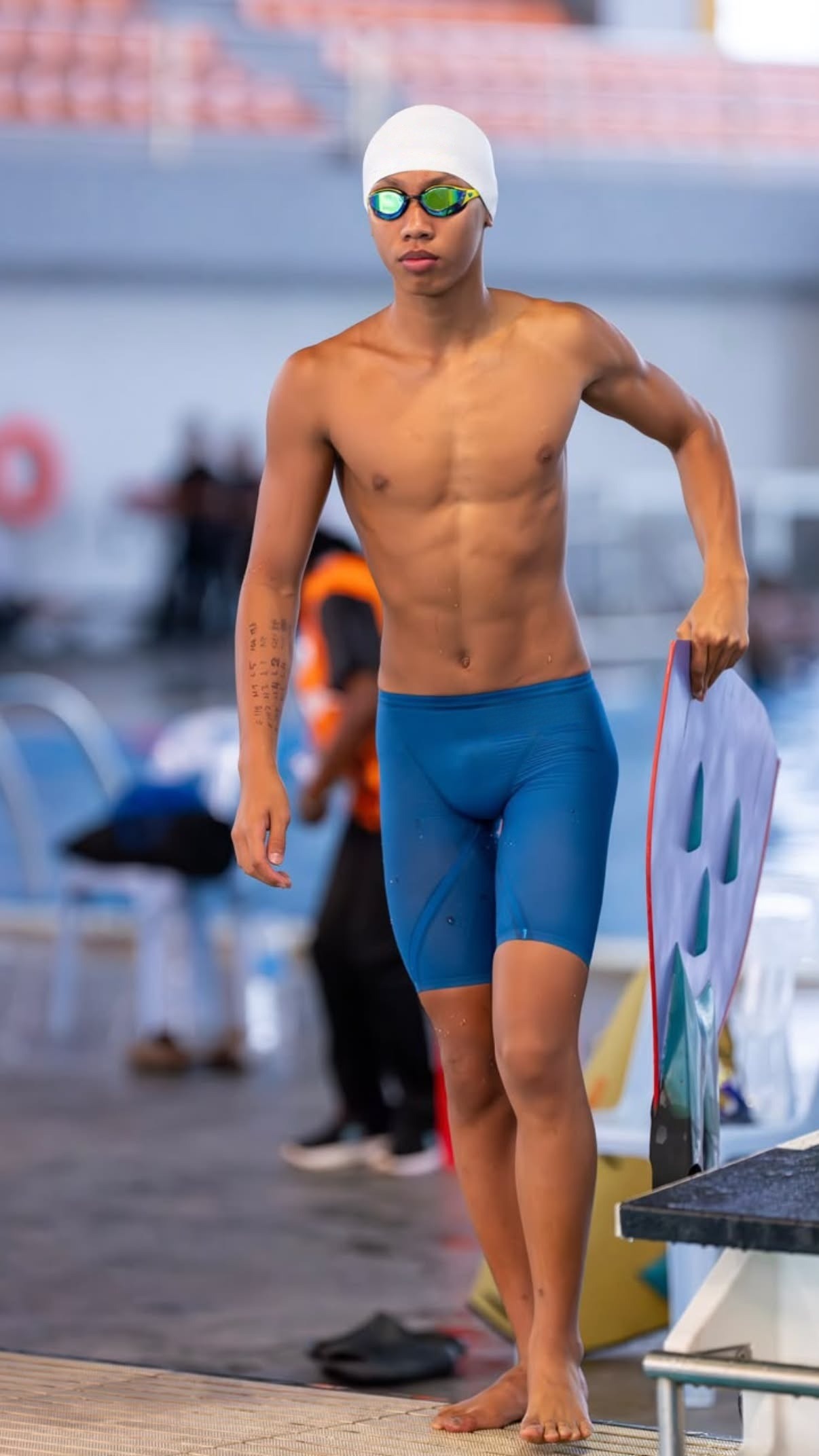
On 12 November, he placed sixth in the Men’s Junior 2 200m bi-fins in 2:07.08, coming home in 31.95 for the final 50m after a 35.31 third lap. He said he used a breathing technique, held his average pace in the early laps and built his speed over the last 50m.
Later that morning he was fifth in the Men’s Junior 2 50m apnoea in 21.20, a race swum underwater on a single breath.
“I keep myself calm and composed to finish the race as fast and smoothly as I can, since I had just finished my 200m bifin event just before the apnea. I was really out of breath and not able to maintain my test trial (19 seconds). So, it’s not my personal best this time around,” he said.
He opened the meet on 11 November with ninth place in the 50m bi-fins in 24.20 and 11th in the 100m bi-fins in 55.70, against a field led by junior sprinters from China.
“Their physiques and strength are much better than mine, so I guess I need to use my best weapon, like my breathing technique, to cope with the situation,” he said.
For months before the competition, he and his coach worked on his stamina, strength and technique, with land drills for agility and weight training twice a week.
“My coach instructed me to perfect my techniques to beat the opponents who are physically larger and stronger than me,” he said.
His day starts as early as 6am with flexibility and mobility exercises to avoid injuries. School finishes around 2pm, and after a rest he trains from 5pm to 7pm, Tuesday to Sunday, then does his homework at night and goes to sleep around 11pm. Monday is his rest day.
“Sometimes I struggle too as a student athlete, but I manage,” he said.
He thanked his family, especially his mother and father, for letting him pursue his career as a student athlete. He said he knew it was not an easy decision, as they send him off to train every day and have invested a lot of money in him.
“Thank you too to my coach for believing in me to reach the world level, which I did not expect I could do, and my friends who train with me through our ups and downs. God knows what we endure to reach this level,” he said.
“My next target in the future is to qualify again as Team Malaysia for World Championship 2027 and get the gold medal for my apnea, bifin and surface events,” he said.


