
Philippines’ Ashton Jose Ends NCAA With Nine Medals and a 2:19.42 200m Breaststroke Record

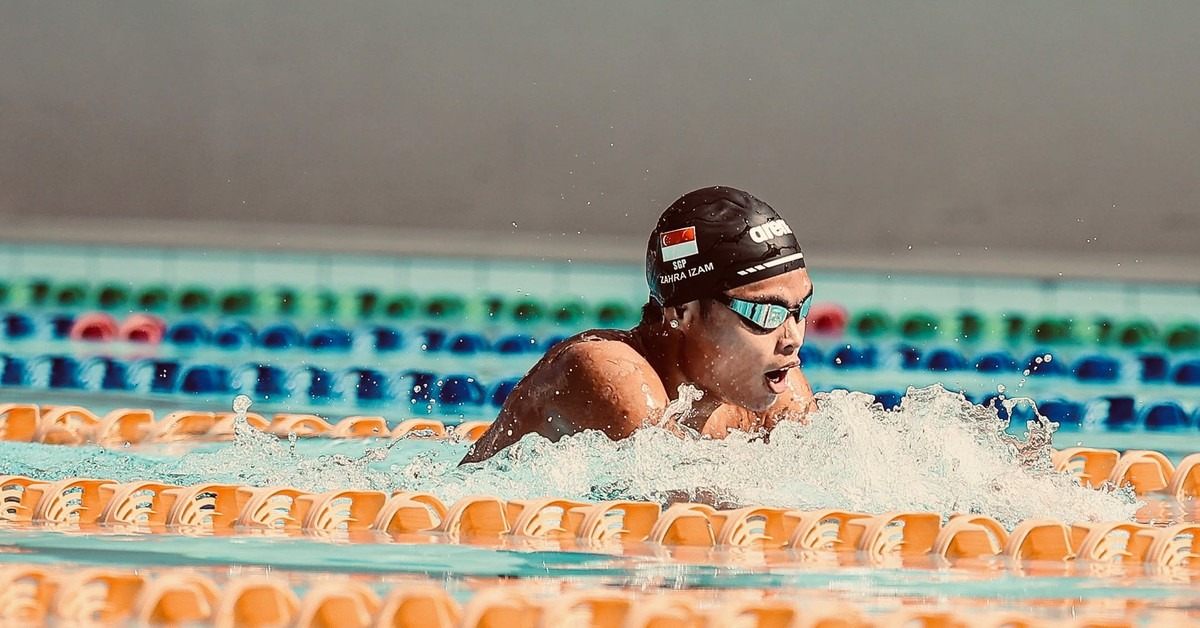
Letran swimmer Ashton Jose broke the NCAA 200m breaststroke record twice on his way to nine medals, four of them gold, in his final season at the NCAA Season 102 swimming competitions in Manila.
The meet was held at the Rizal Memorial Sports Complex, where La Salle Green Hills retained the boys’ juniors division title, the Manila Times reported.
Jose told ToughASIA he first broke the 200m breaststroke record with 2:21.56 in the preliminaries, then lowered it to 2:19.42 in the final.
“Definitely my 200m breaststroke final. I’ve been chasing a sub-2:20 for a long time, so finally hitting 2:19.42 meant a lot to me,” Jose told ToughASIA when asked which race he was proudest of.
He said the swim was also a new best for the Philippine junior 16-18 homegrown category.
His other golds came in the 50m breaststroke in 30.56, the 100m breaststroke in 1:04.93 and the 200m individual medley in 2:10.25.
Jose said his four NCAA records came in three events: the 100m breaststroke, the 200m freestyle and the 200m breaststroke twice. He took silver in the 200m freestyle in 1:57.52 and said he broke the record despite finishing second.
Jose’s other silvers came in the 400m individual medley in 4:45.68 and in the 4x50m and 4x100m medley relays. He added bronze in the 50m freestyle in 24.80.
The 200m individual medley was the race that did not go to plan, he said.
“I swam 2:10.25 and missed the NCAA record by just 0.29 seconds. It was frustrating knowing how close I was, but I couldn’t let one race affect the rest of my events. I just moved on and focused on the next race,” he said.
Asked what he wanted to show in his last NCAA meet, Jose said: “I just wanted to show how far I’ve come. I started my NCAA journey with two bronze medals, and now I’m ending it with 9 medals and 4 records.”
“More than anything, I wanted to prove to myself that all the hard work and sacrifices were worth it,” he said.
Jose said his mindset changed the most, to the point where he built his own app to track and analyse every swim session, his land training and his calorie intake.
“I started studying my training data to figure out where I was lacking and what I needed to improve. I think paying attention to those small details and staying consistent made the biggest difference,” he said.
He said asthma can make intense training harder at times, but he has learned how to manage it.
“I’d tell younger athletes with asthma not to let it discourage them from chasing their goals. Just make sure to take care of your health and follow your doctor’s advice. Having asthma doesn’t mean you can’t achieve big things in sports,” he said.
Jose named his coaches, teammates and family as his biggest influences.
He said his biggest strength in breaststroke is keeping his technique when he is tired, and that he treats his last 50 like the last 50 of a 100m breaststroke, giving everything he has left. He is still working on his stroke efficiency and speed.
His main goal now is to qualify for the 2027 SEA Games and, he hopes, to represent the Philippines internationally. One of his next targets is the official Philippine 16-18 age-group record of 2:18.30 in the 200m breaststroke, and after that he wants to push towards 2:17 or faster.
“I’m proud of what I’ve achieved in the NCAA, but I feel like I’m just getting started,” he said.


