Adam Fareez Tries a New Pacing Plan and Finishes 11th of 486 in the Eastcoast Half Marathon 10km

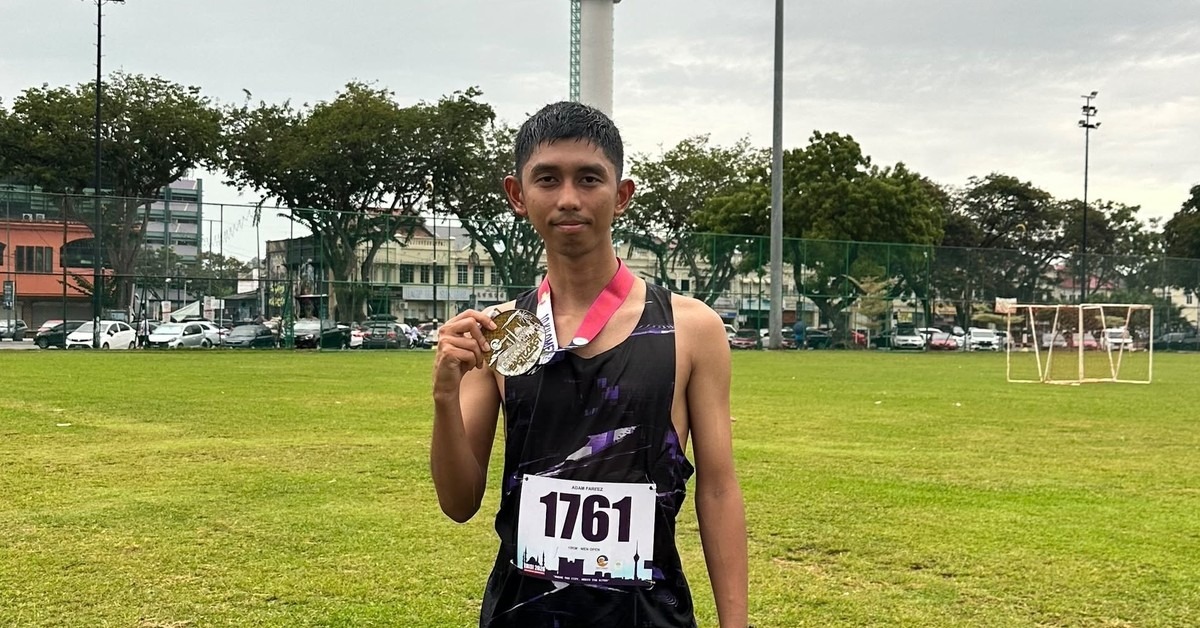
Adam Fareez finished 11th of 486 runners in the 10km at the Eastcoast Half Marathon in Kuantan on 15 November 2026, clocking a net time of 41:22 while trying a new strategy of holding back early.
He was also 11th of 195 in the 10km Men Open, according to his finisher certificate, which lists a gun time of 41:23. The course was a World Athletics certified measured course, in cooperation with AIMS.
“Alhamdulillah, I’m really grateful to finish 11th with a time of 41:22. Honestly, I felt a little down because my original target was to go under 40 minutes, and maybe my body before the race wasn’t fully ready,” Adam told ToughASIA.
“But thinking back, getting into the top 15 out of almost 500 people with my body not in good shape, all the hard work in training was worth it. So the right planning and preparation are very important before a race starts.”
The time was not a personal best. He said a flat course like this one should have been the best chance to set a new one, and that he had aimed for an official sub-40 at an event recognised by World Athletics.
“But I realise it was my own mistake too, because I knew my body wasn’t quite fully ready at the time, so I took the risk of trying a new strategy at a new place, something that was actually quite challenging and maybe shouldn’t have been done,” he said.
“Despite the disappointment, I still really enjoyed the vibe and atmosphere of the event that day, and I see it as a blessing and a lesson for future races.”
His old habit, he said, was to sprint the first 5km and then, from halfway, “gamble” and try to control what he could until the end.
“For this race, I tried a new strategy where I tried to hold myself back and not go too fast at the front, keep a stable pace, and save energy to sprint hard over the last 1-2 kilometres,” he said.
“This is quite new for me and I’m still in the phase of trying to adapt. But I think this strategy is very useful, especially for half marathons (21km) and full marathons (42km), so we don’t bonk or cramp in the final kilometres.”
He started from the front with a group of fast runners, which he said helped him find his tempo and rhythm and pushed him to stay with the leading group for as long as he could.
When he tired and lost touch with that group, his focus switched to making sure the runners behind him could not overtake him. In the final kilometres, when the course met the half marathon runners, he set himself the goal of overtaking every half marathon runner ahead of him, even though they were not as fast as the leading 10km runners.
“This kept me motivated. So during a race we must always stay positive and be smart about finding any small thing that can motivate ourselves,” he said.
“The course was really nice, flat and beautiful along the river. But the east coast weather, you know how it is, the heat and humidity are on another level. Just halfway through, sweat was already pouring and my heart rate went up quickly,” he said.
He said he forced himself to adapt to the conditions on the day and tried to keep his running consistent.
Much of his training in 2026 has focused on speed, with speedwork and short intervals, as he has raced many ekiden events and races shorter than 5km. For the Eastcoast Half Marathon 10km, he added more long runs for endurance, alternating with tempo and interval sessions. What he did most this time, he said, was easy runs in a group with friends.
The biggest challenge came from himself, he said. In training, it was hard to switch from short, fast sessions to longer training for 10km. In the race, the mental challenge was facing fatigue halfway through, especially while trying a strategy he had not used before.
“The way I handle it, I try to rest enough, not be too hard on my body, and most importantly, strengthen my mind by seeing every challenge as part of the process of becoming a more mature runner,” he said.
Adam has just finished his studies and started working, and said it has been hard to fit training around work. His job takes a lot of mental and physical energy, and his office is about 30km from home, with bad traffic jams at peak hours. If he goes straight home, he said, he is too tired to go out for a run.
To beat the laziness, he goes straight to the stadium at Universiti Putra Malaysia (UPM) after work. Many elite runners and other runners train there, and he joins their sessions.
“When I see other people training with enthusiasm, the laziness just disappears. The main secret is mindset: we must always push ourselves to stay positive,” he said.
For runners hoping to go under 45 minutes for 10km, or closer to his time, his advice is to do plenty of easy runs.
“Just run really slowly. Most runners, including me, make the mistake of wanting to run fast every day until the body doesn’t have time to recover. Save that energy for interval or tempo days, then we can go all out in the sessions that really matter,” he said.
For runners who work, he said, the focus should be on time: arrange your schedule and find a suitable time so it is easier to adapt to the new routine.
Adam will keep focusing on longer-distance training for 10km and 21km as he prepares for 2027. Next on his schedule are a 10km race on 6 December and the Langkawi International Half Marathon on 12 December.
“If it’s my good fortune to do them with my body in good condition, these two races will close my 2026, and I really want to try my best so I can make them a stepping stone to set new targets for early and late 2027,” he said.